
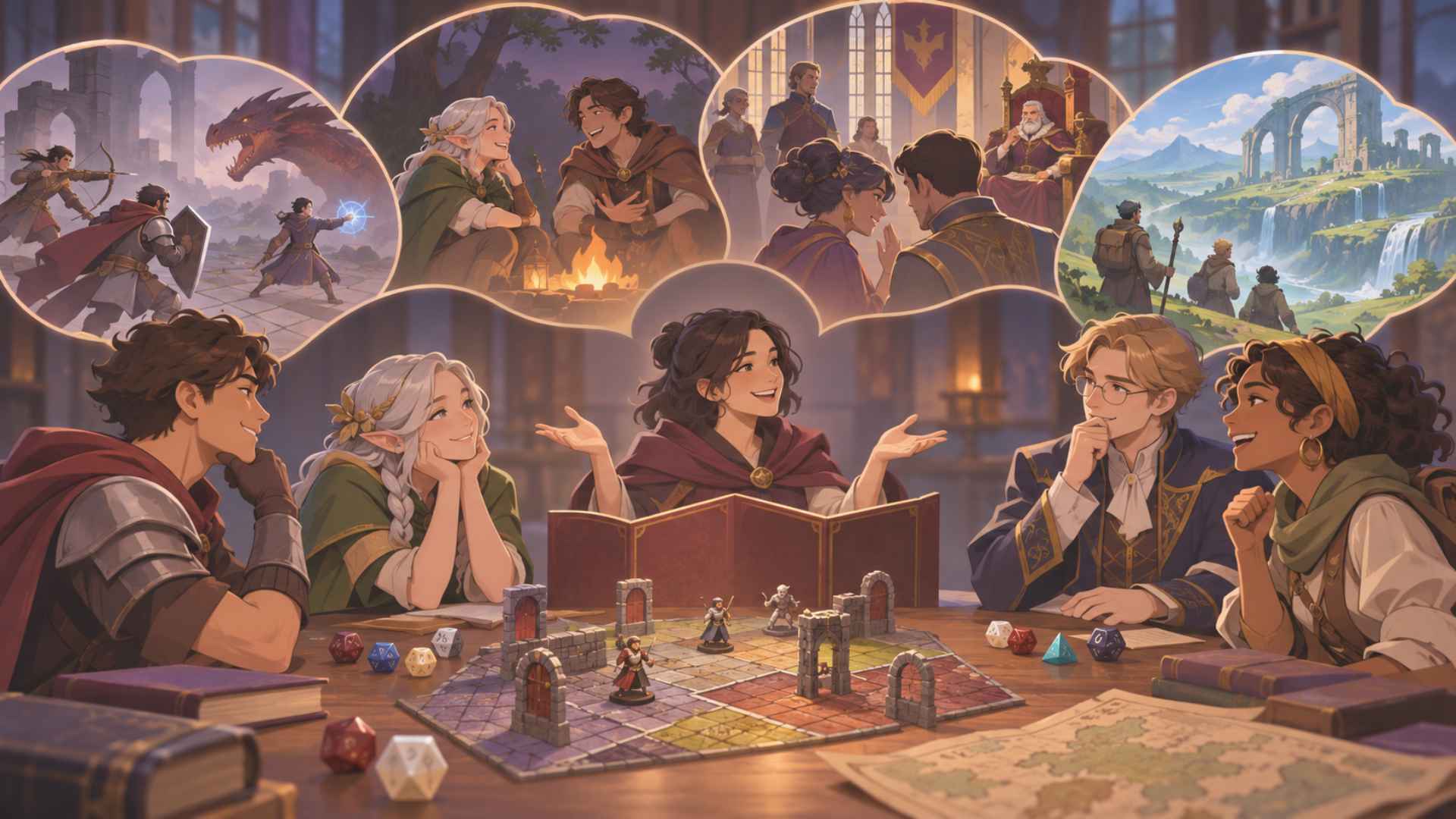
Tabletop role playing games create shared adventures, but participants often arrive with different ideas of a rewarding session. Some prefer tactical battles with clear stakes, while others care most about character relationships, political intrigue, or unfamiliar places. A campaign can include all of these interests, yet the time devoted to each activity determines its overall character. Player preference is not a measure of skill or commitment. It describes the experiences participants value and the choices they tend to make during play. Recognizing these differences helps a group set realistic expectations without treating one approach as superior.
These differences also appear in the rules themselves. Dungeons & Dragons identifies combat, social interaction, and exploration as major parts of play, although their relative importance varies by campaign. Evidence of varied priorities appears in a 2020 independent survey of 1,006 tabletop RPG respondents: 61.3 percent rated roleplay as very important, and another 31 percent considered it fairly important. The voluntary sample does not represent the entire hobby, and the figures do not measure preferred time spent on each activity. They nevertheless demonstrate substantial interest in character based play among those surveyed.
Combat, Character Drama, and Exploration
Combat focused players often value decisions with measurable consequences. Position, available resources, initiative order, and the abilities of allies can affect the result of a conflict. In Dungeons & Dragons, combat follows rounds and turns, with initiative determining the order of actions. A tactical campaign can make resource expenditure, terrain, and teamwork central to each encounter. Other systems resolve conflict with fewer mechanical steps. Neither format automatically creates a better experience. What matters is whether the level of detail matches the group’s preference for tactical choices, uncertainty, and pace.
Character focused players may be more interested in motives, relationships, and the consequences of personal decisions. Their preferred scenes might feature negotiations, family obligations, rivalries, or changes in loyalty. Roleplay does not require theatrical voices or lengthy dialogue. Dungeons & Dragons rules recognize both active portrayals and descriptive narration, so a participant can state a character’s intentions without performing them. Exploration oriented players, meanwhile, may favor maps, environmental clues, travel decisions, and unfamiliar cultures. These interests overlap: an abandoned fortress can present tactical hazards, historical clues, and a dispute with its inhabitants in a single adventure.
Player Preferences Rarely Fit One Category
Play styles are better treated as tendencies than permanent identities. A person who enjoys detailed combat may also care deeply about a character’s personal history. Someone attracted to mysteries might enjoy a difficult battle once its outcome affects the wider story. Campaign genre and rules influence these preferences as well. An investigation emphasizes evidence and inference, while a survival scenario gives greater weight to supplies, risk, and limited information. The same group may favor different activities at different stages of a campaign, especially as characters gain abilities and relationships develop.
Research also points beyond simple labels. A 2026 qualitative study published in the International Journal of Role Playing analyzed survey responses from 1,120 Dungeons & Dragons participants. Its reported themes included player agency, fair or unfair adjudication, character engagement, the appeal of the game world, and social cohesion or conflict. The study examined participants’ experiences rather than establishing a universal ranking of play styles. Its findings underline the relevance of meaningful choices and consistent rules, regardless of whether a session centers on battle, conversation, or travel.
Campaign Structure and Respect for Different Approaches
The clearest place to address differences is before a campaign begins. During a session zero, the game master and players can agree on the intended balance of combat, character interaction, and exploration. They can also establish the campaign’s tone, likely difficulty, character death expectations, and tolerance for conflict between player characters. These details have practical consequences. A player attracted by political intrigue may be disappointed by repeated battles without meaningful decisions, while a tactical player may lose interest if mechanical challenges rarely appear. Specific expectations reduce the risk of a mismatch.
Variety within individual sessions can give participants several ways to contribute. A dangerous journey might offer a route decision for the group strategist, a conversation with a guide for a socially focused character, and environmental evidence for a curious investigator. Not every scene needs to serve everyone equally, but sustained attention to only one preference can leave other participants with limited agency. Participation also takes different forms. Brief descriptions, third person dialogue, written character notes, and spoken performance can all represent valid character decisions. Equal respect does not require identical behavior at the table.
Preferences should remain open to revision as the campaign develops. In a 2023 study published in Simulation & Gaming, researchers used an online survey of 354 Dungeons & Dragons players and focus groups with 14 participants to examine play that deliberately challenges boundaries. Their analysis emphasized player agency and collaborative negotiation. That distinction is relevant beyond intense fictional scenes: consent to a campaign’s initial style does not eliminate the need for later feedback. Short discussions after sessions can reveal unwanted shifts in tone or pace. A sustainable campaign accommodates differences through clear agreements, fair opportunities to act, and respect for each participant’s limits.