
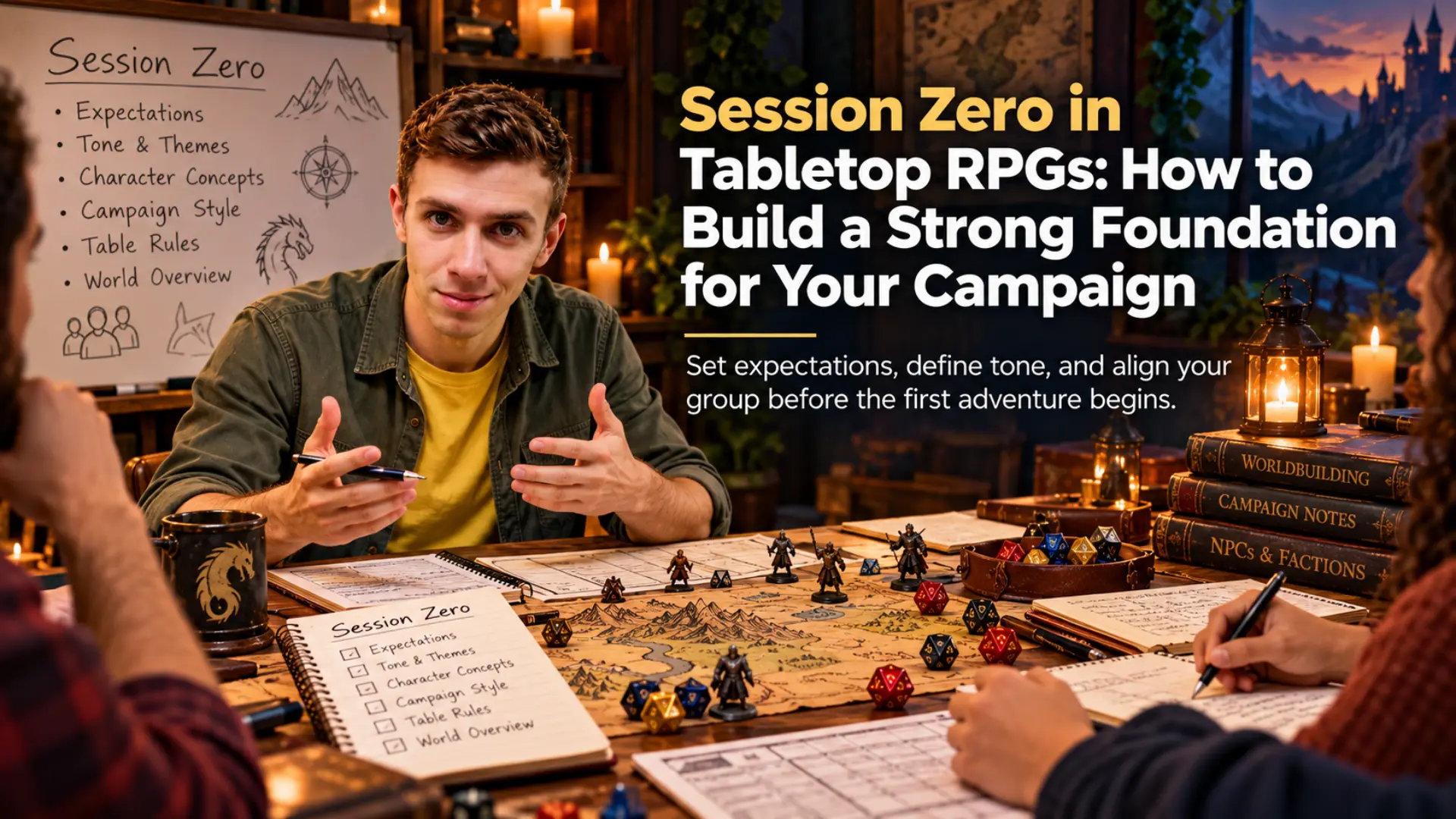
Starting a tabletop role-playing campaign involves more than selecting a game system and creating characters. Every participant brings individual expectations about storytelling, rules, cooperation, and the type of adventure they want to experience. When these expectations differ significantly, misunderstandings can emerge after the campaign has already begun. Many gaming groups address this challenge through a preliminary discussion commonly known as session zero. This conversation gives participants an opportunity to establish a shared understanding before the main adventure starts.
Session zero is not a separate game system or a universal requirement for tabletop role-playing games. Instead, it is a widely used preparation practice that groups can adapt to their circumstances. The discussion may cover campaign themes, character creation, scheduling, table etiquette, and personal boundaries. Some groups complete the process through a short conversation, while others dedicate an entire meeting to preparation. Regardless of its length, the purpose is to make future play more organized, cooperative, and comfortable for everyone involved.
What Is Session Zero in a Tabletop RPG?
Session zero refers to a discussion or preparation session held before regular campaign play begins. It allows the game master and players to clarify how they intend to approach the game. Participants can discuss the fictional setting, the structure of the campaign, and the rules that will guide their adventures. This is particularly useful when group members have different levels of experience with the chosen system. Establishing basic expectations early provides a common reference point for future decisions.
The content of session zero depends on the needs of the group and the game being played. A fantasy campaign might require an explanation of character classes, magic systems, and the setting’s major factions. An investigative horror game may need additional discussion about suspense, vulnerable characters, and difficult fictional themes. A rules-light narrative game could place greater emphasis on shared storytelling responsibilities. Each approach reflects the fact that different tabletop RPGs create different expectations for participants.
Establishing the Campaign’s Genre, Tone, and Playing Style
A campaign’s genre shapes the kinds of stories and challenges that players are likely to encounter. Fantasy games often include magical abilities, fictional creatures, and heroic quests, while science fiction games may explore advanced technology and unfamiliar societies. Horror campaigns frequently emphasize uncertainty, danger, and investigation rather than straightforward heroic victories. Even within the same genre, the intended tone can range from humorous and adventurous to serious and dramatic. Discussing these differences helps participants understand the atmosphere the group wants to create.
Playing style is another important consideration because tabletop RPGs support different approaches to problem-solving. Some groups enjoy tactical encounters in which positioning, resources, and character abilities strongly influence decisions. Others prefer social interaction, exploration, or stories built around relationships between characters. Many campaigns combine several approaches instead of concentrating on a single activity. Identifying the group’s preferences can help the game master prepare situations that offer satisfying opportunities for participation.
Creating Characters That Work Together
Character creation is often one of the most enjoyable stages of preparing a tabletop RPG campaign. Players may select a character’s abilities, background, personality, equipment, and motivations according to the rules of their chosen system. In class-based games such as Dungeons & Dragons, character classes influence the abilities available during play. Other systems use skills, narrative descriptions, or different mechanical frameworks to represent characters. Understanding these distinctions helps players make choices that align with the game’s intended experience.
Individual character concepts also need to function within a shared campaign. A character with a compelling personal history may still create difficulties if their goals consistently prevent cooperation with the group. Session zero provides an opportunity to establish connections between characters and explain why they would participate in the same adventure. Players might decide that their characters share a responsibility, belong to the same organization, or have encountered one another previously. These connections give the opening session a stronger narrative foundation without requiring every character to have identical beliefs or motivations.
Discussing Boundaries and Player Comfort
Tabletop RPGs can explore serious subjects, including violence, fear, betrayal, loss, and moral conflict. These themes may contribute to a compelling fictional narrative, but participants can have different comfort levels with them. A discussion before play allows the group to establish which subjects are appropriate for the campaign. Participants can identify content they would prefer to exclude entirely or handle without detailed description. This helps distinguish between dramatic tension within the game and discomfort that participants do not want to experience.
Some gaming groups use established safety practices to support these conversations. Lines and Veils is one approach that distinguishes between content excluded from play and content that may exist in the story without being described explicitly. The X-Card is another known tabletop safety tool that provides a way to signal when content should be changed or removed. These methods can be adapted according to the game’s format and the group’s preferences. Regardless of the specific method, participants benefit from knowing that boundaries can be discussed and respected throughout a campaign.
Managing Schedules, Rules, and Group Expectations
Practical arrangements can have a significant effect on whether a tabletop campaign continues successfully. Participants often need to coordinate work, education, family responsibilities, and other commitments around gaming sessions. Discussing the expected session length and frequency makes those responsibilities easier to manage. Groups can also decide how they will handle player absences, postponed sessions, and changes to the regular schedule. Clear arrangements reduce uncertainty and prevent routine logistical questions from interrupting the campaign.
Rules expectations deserve similar attention because different groups interpret or modify games in different ways. Some prefer to follow published rules closely, while others agree on house rules that adjust particular mechanics. A game master may also need to explain how rules questions will be resolved when an answer is not immediately available. Establishing these procedures before play gives participants a clearer understanding of how decisions will be made. Consistency is especially valuable when character abilities, resource management, and the consequences of actions depend on mechanical interpretation.
Turning Session Zero into a Successful First Adventure
After discussing expectations, the group can use its decisions to prepare the opening adventure. The game master can connect character backgrounds to the setting and develop situations that reflect the group’s preferred themes. A clear starting objective provides direction without requiring participants to follow a rigid sequence of events. Introducing a manageable conflict can also help players become familiar with the system’s core mechanics. The first session does not need to reveal the entire campaign’s story or introduce every important character.
The transition from preparation to play is also an opportunity to test the group’s agreements in practice. Players may discover that a particular rule requires clarification or that certain activities are more enjoyable than expected. Short discussions after a session can help identify which elements worked well and which may benefit from adjustment. This does not mean that the original session zero failed, because group preferences can become clearer through experience. Treating campaign preparation as an ongoing conversation allows tabletop RPG groups to adapt while maintaining shared expectations.
Final Thoughts on Preparing a Tabletop RPG Campaign
Session zero is a practical method for organizing the social, mechanical, and creative elements of a tabletop role-playing campaign. It provides a space for discussing the rules, the fictional setting, character relationships, and the expectations of participants. The process is flexible enough to work with many different systems, including fantasy adventures, investigative mysteries, and narrative-focused games. Its value comes from helping the group identify important decisions before those decisions become sources of confusion during play. A thoughtful preliminary discussion can make the beginning of a campaign clearer and more manageable.
However, session zero should not be treated as a substitute for communication during the rest of the game. Player preferences, character motivations, and campaign circumstances may change as the story develops. Groups benefit from revisiting their agreements when new situations or concerns arise. By combining preparation with ongoing cooperation, participants can support an enjoyable balance between structured rules and creative freedom. The result is a stronger foundation for collaborative storytelling and the shared experience that defines tabletop role-playing games.